Selling a Manufactured Home Together With Its Land
Owning both the home and the ground under it removes the park from the picture, but it adds a different question: is the home still personal property, or has it become part of the real estate?
- Cash buyer for factory-built homes
- Park space or owned land
- Sold as-is, no fixing up
- No agent commission
- You set the closing date
When the dirt comes with the house
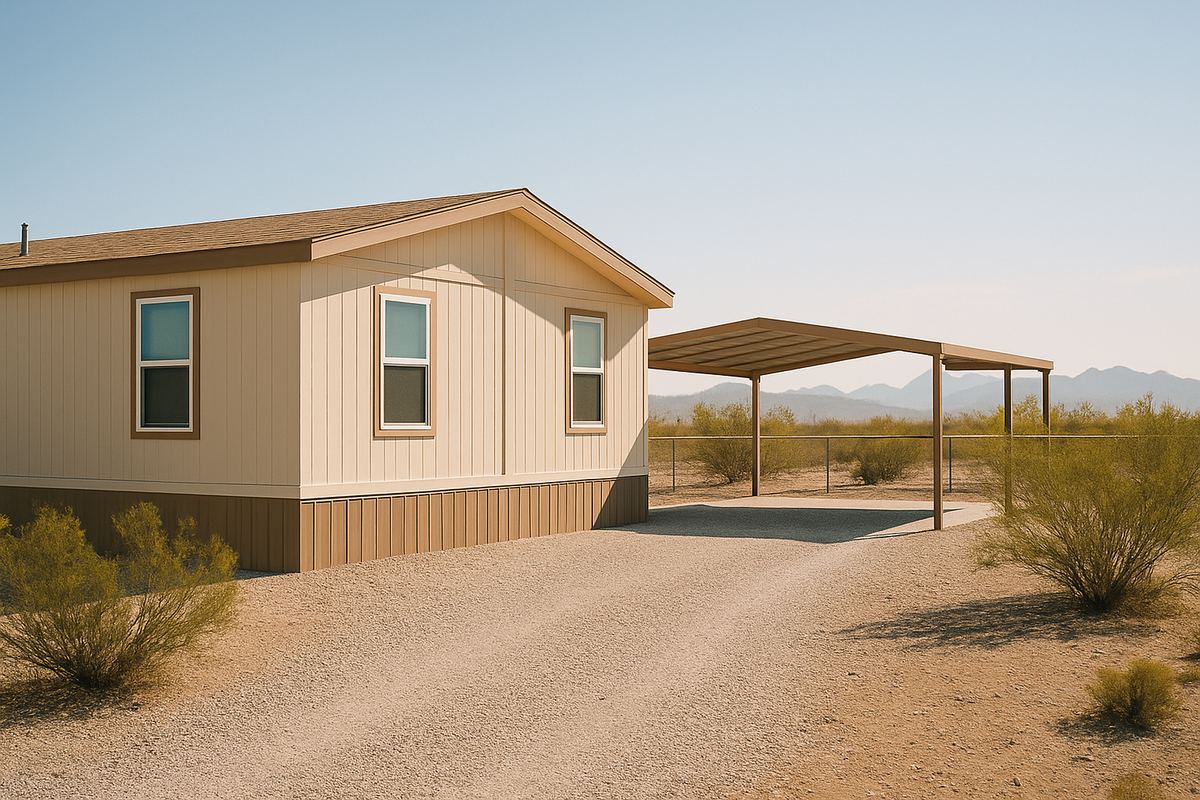
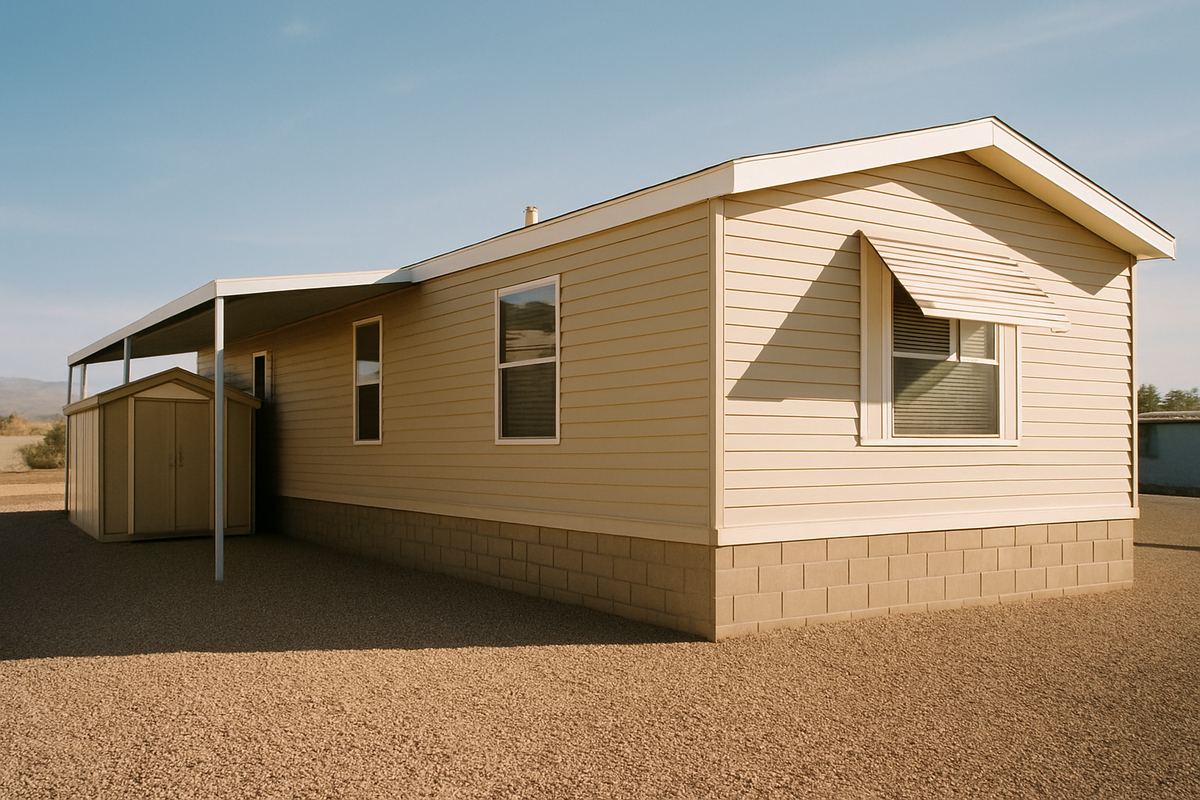
Plenty of manufactured homes in southern Nevada sit on lots their owners hold outright: a parcel at the edge of town, a lot in an older subdivision built for manufactured housing, or acreage further out where site-built construction never took hold. Selling one of these is closer to a traditional real estate sale than selling a home inside a land-lease park, because there is no landlord to approve the buyer. The trade-off is that you need to know exactly how the home itself is recorded.
It is also worth knowing that the same piece of land can carry more than one layer of history. A lot may have held an older unit that was later replaced, a carport or addition may have been built on later, and the paperwork for each change may or may not have been filed. None of that is unusual, and none of it prevents a sale.
Personal property or real property?
What the assessor sees
According to the Clark County Assessor, manufactured homes are by definition considered personal property and are taxed on the unsecured roll using a depreciation schedule. A home in that status has its own certificate of ownership from the Manufactured Housing Division, separate from the deed to the land. Owners who hold both the home and the land may be eligible to convert the home to real property, after which it is treated as part of the parcel.
So when you own the lot, there are really two common situations: a home that was converted and is now part of the real estate, and a home that still carries its own title even though it has sat on your land for years. Both can be sold; the paperwork is just different.
Tell Us About the Home You Want to Sell
Send the basics and someone from our team looks over the home, the lot or park it sits in, and anything you mention about its condition or paperwork. We call you back with questions before we talk numbers.
Park spaces and owned lots across the Las Vegas valley are both fine with us. If you would rather speak with a person right away, the TALK TO ALEX button in the lower corner rings our line.
Converting a home to real property in Nevada
Conversion is addressed in NRS 361.244, part of Nevada's property tax chapter. What follows is a plain-language summary and not legal or tax advice.
Running gear and the foundation
As we understand the process, the running gear (wheels, axles and hitch) must be removed and the home installed in line with state and local building codes on a permanent foundation system. An inspector is generally involved in verifying that the running gear is gone.
The recorded affidavit
An affidavit of conversion to real property is recorded with the county recorder where the home sits. The Nevada Housing Division notes that the process usually begins at the county assessor's office, and that each county may have its own requirements based on policy and zoning.
Liens can follow the land
The affidavit form itself warns that liens or encumbrances on the home may become liens on the land after conversion. That is one reason a title company review matters when a converted home is sold.
If the home was never converted
Many older homes on owned lots were simply never converted. That is not a problem for a cash buyer; it just means the home's state title and the land's deed both have to transfer, and the personal property taxes on the home have to be current. If one of those documents is missing, our page on clearing up manufactured home title problems may help.
Our process for a home and lot together
- Share the parcel and home details: the address or parcel number, the home's approximate year, and whether you believe it was converted.
- We check public records with the county and the state title search to see how the home and land are currently recorded.
- We visit the property, including the well, septic and outbuildings if there are any, and then make a cash offer for everything as-is.
- A title or escrow company handles the closing, transferring the deed and, if needed, the home's certificate of ownership.
- You pick the closing date that fits your move.
For the general sequence, the overview of how a cash sale works.
Questions to settle before you sell a lot and home
Before you talk to any buyer, a few questions are worth answering for yourself. Who is listed on the deed to the land, and is that the same person or people listed on the home's title, if it still has one? Is there a mortgage or a home-equity loan recorded against the parcel? Are the personal property taxes on the home, or the real property taxes on the parcel, current? And does anyone else, such as a relative who once helped with the purchase, believe they hold a share?
You do not need perfect answers to start, but knowing the rough picture lets a buyer explain exactly what will happen at closing. It also keeps a title company from discovering something late in the process. We are glad to look up the public records with you and walk through what they show.
Finally, think about timing. Selling a home on your own land with no park involved can move on your schedule, so decide when you want to be out and plan backward from there. We will work around the date you pick.
Lots outside the city grid
Wells, septic and acreage
Outlying properties often come with features that put off retail buyers and lenders: a private well, a septic system, dirt access roads, or extra structures added over the decades. We buy these as they stand. In Pahrump, where many homes sit on acreage, the home is in Nye County, so taxes and recording run through Nye County offices rather than Clark County.
Closer in, owned lots turn up around Boulder City and in parts of Henderson. If the property came to you from a relative, our page on selling an inherited mobile home covers the extra estate paperwork, and an older pre-1976 mobile home has its own considerations. Common questions are collected on our seller questions page.
Straight Answers for This Situation
How do I know if my manufactured home was converted to real property?
A good starting point is the Clark County Assessor or, in Pahrump, the Nye County Assessor. If the home was converted, it is generally assessed with the parcel and an affidavit of conversion should be on record with the county recorder. If the home still appears on the state title search, it likely still has its own certificate of ownership.
Can I sell the land and the home separately?
It is possible when the home has not been converted, because the home and land carry separate ownership records. Most buyers, including us, prefer to buy both together, since a home without a place to sit and a lot with a home someone else owns are each harder to deal with.
Do you buy homes with wells and septic systems?
Yes. A private well, septic tank, dirt road or older outbuildings do not stop us from making an offer. We look at the whole property in person and buy it as it stands, so you do not need to inspect, pump or repair anything first.